
If you’ve noticed your dark spots getting darker in your 40s…
You’re not imagining it.
Hormones directly influence melanocytes — the cells responsible for pigment production.
When estrogen fluctuates, melanocyte activity becomes more unpredictable.
This is why:
-
Melasma can appear out of nowhere
-
Old sun damage resurfaces
-
Spots become more stubborn

The Science of Hormonal Pigment
According to the American Academy of Dermatology:
https://www.aad.org/public/diseases/a-z/melasma-overview
Hormonal shifts stimulate melanocyte-stimulating hormone (MSH), which increases melanin production.
Add:
-
Sun exposure
-
Inflammation
-
Stress
-
Barrier damage
And pigment becomes amplified.
The Mistake Most Women Make
They panic.
They over-exfoliate.
They layer acids.
They scrub.
They strip.
And this increases inflammation.
Inflammation = more pigment.
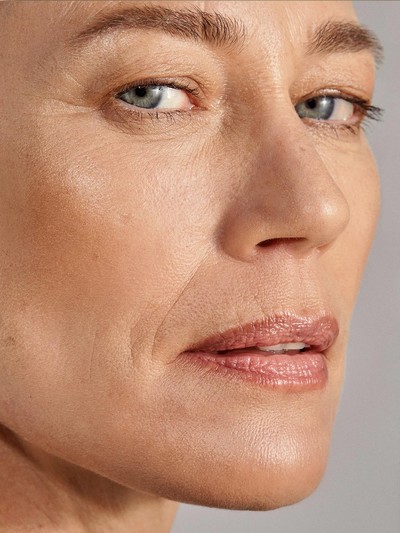
The Egyptian Beauty Approach
Instead of attacking pigment, we:
-
Calm inflammation
-
Repair barrier
-
Support cellular turnover gently
-
Protect collagen
This is why I love layering:
Universal Face Oil and Radiance Under Eye Balm
The Under Eye Balm contains:
-
Tallow (bioavailable lipids)
-
Prickly pear seed oil (vitamin E powerhouse)
-
Cacay oil (natural retinol-like support)
-
Gotu kola (collagen support)
These ingredients nourish without triggering inflammation.
What Actually Improves Hormonal Pigment
-
Daily mineral sunscreen
-
Lipid-rich skincare
-
Anti-inflammatory oils
-
Sleep regulation
-
Blood sugar balance
Research on inflammation and pigment regulation:
https://www.ncbi.nlm.nih.gov/pmc/articles/PMC5843359/
This isn’t about “fixing” your skin.
It’s about calming it.
And when inflammation drops, pigment slowly softens.
FAQ: Hormonal Hyperpigmentation After 40
Why does hyperpigmentation get worse after 40?
Hormonal hyperpigmentation worsens after 40 because fluctuating estrogen stimulates melanocyte activity. This can increase melanin production, especially when combined with sun exposure and inflammation. Women may notice melasma or dark spots becoming darker during perimenopause.
Is melasma related to menopause?
Yes. Melasma during menopause and perimenopause is linked to hormonal shifts that influence pigment-producing cells. Stress and inflammation can amplify the condition, especially in women of color who naturally produce more melanin.
How do you treat hormonal hyperpigmentation naturally?
To treat hormonal hyperpigmentation naturally:
• Reduce inflammation
• Support the skin barrier
• Use antioxidant-rich oils
• Wear mineral sunscreen daily
• Avoid over-exfoliation
Calming the skin is often more effective than aggressively targeting pigment.
Why does inflammation make dark spots worse?
Inflammation stimulates melanocytes. When skin is irritated by harsh treatments, over-exfoliation, or stress, it can produce more pigment as a protective response. This is especially common in hyperpigmentation in women of color.
<3 Maha
0 comments